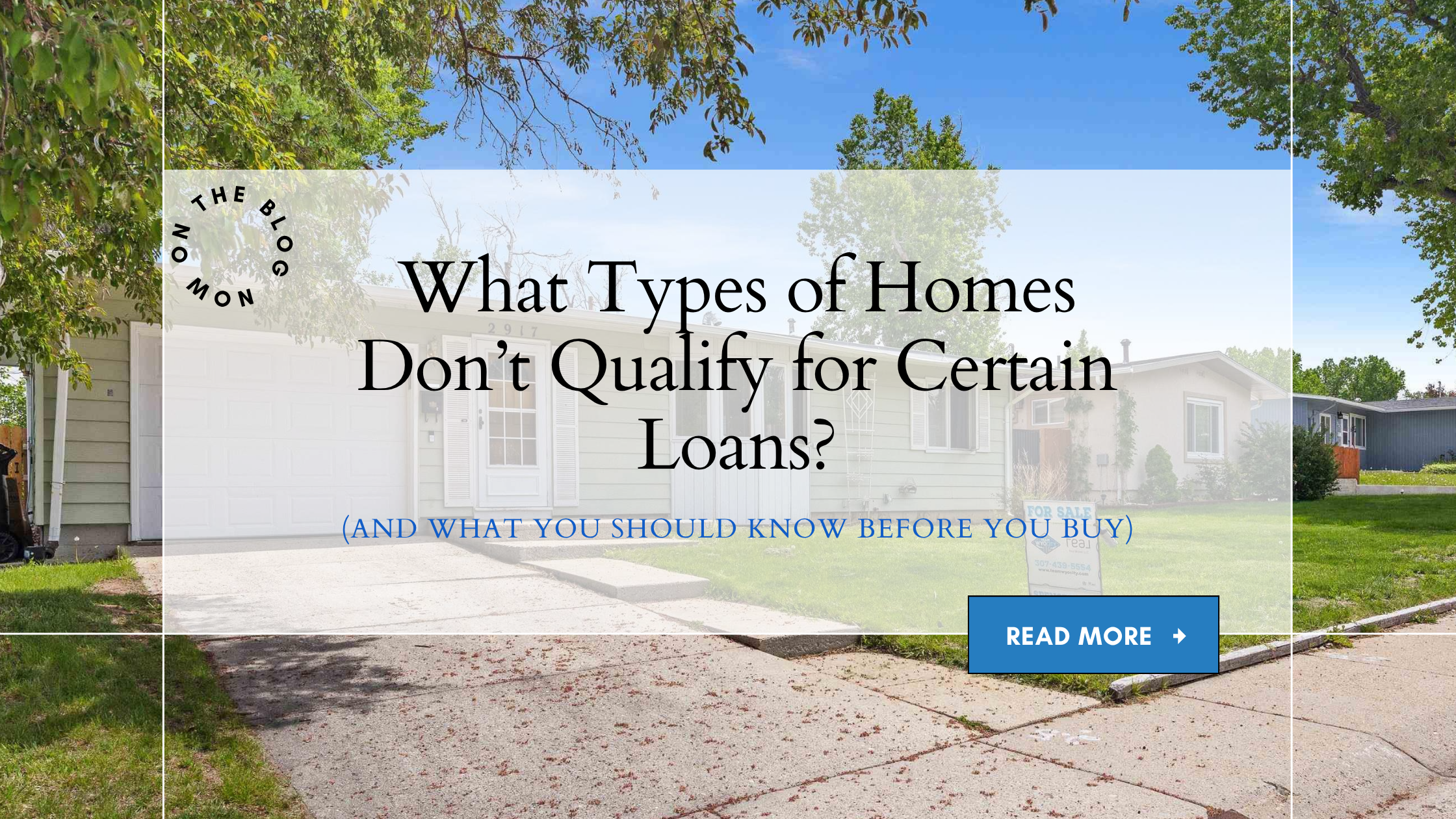
What Types of Homes Don’t Qualify for Certain Loans? (And What You Should Know Before You Buy)
When you're house hunting, it's easy to fall in love with a property before considering whether it will qualify for financing. As a real estate agent, one of the most common hurdles I help buyers navigate is finding a home that not only meets their needs but also aligns with the requirements of their loan type. Let’s break down some of the most common loan types—and the types of homes that might not qualify for them.
🔹 FHA Loans (Federal Housing Administration)
Best for: First-time buyers and lower down payments
May Not Qualify:
-
Fixer-Uppers in Poor Condition: Homes with peeling paint, broken windows, missing handrails, or other safety and structural issues may be flagged during the FHA appraisal process.
-
Non-Permitted Additions or Conversions: If a garage was turned into a bedroom without permits, it could be a deal-breaker.
-
Manufactured Homes Without Permanent Foundations: FHA will only approve manufactured homes that meet specific criteria, including being on a permanent foundation and built after 1976.
🛠 Tip: Sellers can sometimes make repairs to help a home meet FHA standards, but it’s important to know what you’re up against before making an offer.
🔹 VA Loans (Veterans Affairs)
Best for: Active duty service members, veterans, and eligible spouses
May Not Qualify:
-
Homes with Health & Safety Hazards: This includes mold, water damage, lead-based paint, or outdated electrical systems.
-
Properties Without Reliable Utilities or Access: The home must have working plumbing, heat, electricity, and clean water.
-
Unfinished Construction or Flipped Homes Without a One-Year Warranty: If a property was recently flipped or remodeled, VA loans may require extra documentation or warranties.
🇺🇸 Tip: VA appraisals are strict, but they’re designed to protect you from purchasing a home with hidden issues.
🔹 Conventional Loans
Best for: Buyers with strong credit and larger down payments
May Not Qualify:
-
Properties in Poor Condition: While standards are more flexible than FHA or VA, lenders still want to ensure the home is livable and marketable.
-
Condos Not on Approved Lists: If the HOA doesn’t meet lending requirements (like sufficient reserves or owner-occupancy rates), financing might fall through.
-
Tiny Homes or Unusual Construction: Homes built with alternative materials or off-grid setups may be considered “non-warrantable.”
💡 Tip: Conventional loans may offer more freedom, but lenders still want reassurance that the home is a good investment.
🔹 USDA Loans (Rural Development)
Best for: Buyers in rural or suburban areas with moderate income
May Not Qualify:
-
Homes Outside the USDA-Eligible Area Map: Even if the home seems rural, it must fall within the designated zones.
-
Properties That Need Major Repairs: Like FHA and VA, the home must be in decent condition—no major safety issues or incomplete construction.
-
Income-Producing Properties: If the home has a working farm or commercial space, it may not be eligible.
🌾 Tip: Double-check the USDA eligibility map and income limits before falling in love with a home.
🔹 Cash Buyers & Renovation Loans
Homes that don’t qualify for any traditional financing—like complete teardowns, unfinished new builds, or severely damaged properties—may be ideal for:
-
Cash buyers looking for investment opportunities
-
Renovation loans (like FHA 203(k) or Fannie Mae HomeStyle), which allow you to roll the cost of repairs into the loan
Final Thoughts: Always Check Before You Fall in Love 💔
Not all homes are created equal in the eyes of lenders. Before putting in an offer, talk with your lender and real estate agent about what types of homes fit the requirements of your loan. It can save you time, money, and heartache in the long run.
If you're thinking about buying soon, I’m happy to help connect you with local lenders who can help you understand which properties are the right fit for your financing goals!
📲 Have questions about loan-friendly homes in our market? Let’s chat—your dream home should also be the right home for your loan.
:format(webp):quality(80)/u.realgeeks.media/teamwyocity/Facebook.png)
:format(webp):quality(80)/u.realgeeks.media/teamwyocity/Instagram.png)
:format(webp):quality(80)/u.realgeeks.media/teamwyocity/YouTube.png)
:format(webp):quality(80)/u.realgeeks.media/teamwyocity/Zillow.png)